Night-Shift Thermal Inspection at a Substation
A night-time field record can show how technicians frame outdoor apparatus and work around access constraints. It cannot, by itself, prove a hot spot, temperature, or defect severity.
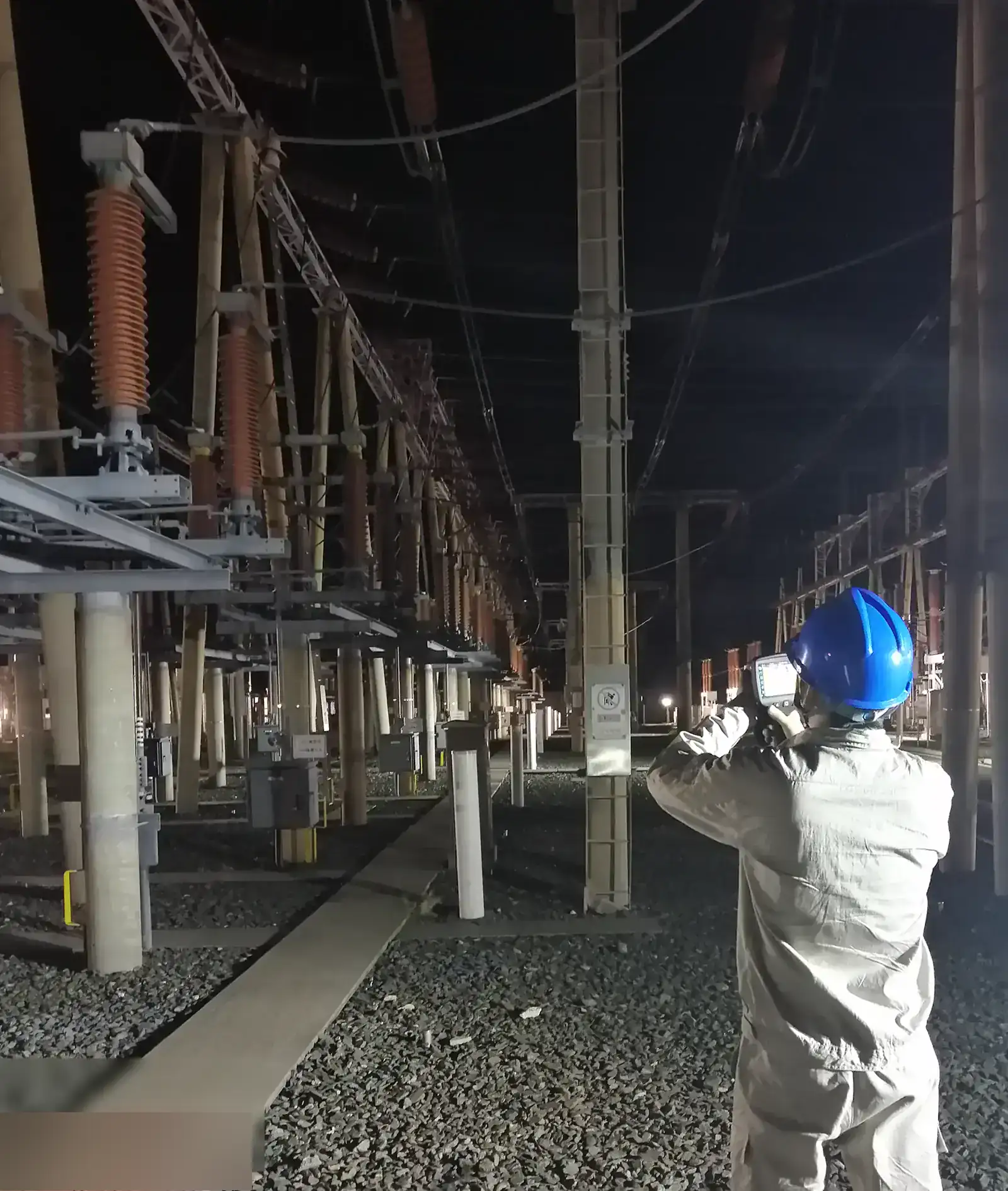
Observed in the supplied photographs: outdoor switchyard structures, energized-looking equipment, and a handheld camera used during a night inspection.
Not disclosed in the supplied material: measured temperatures, load current, emissivity, asset identifiers, finding severity, customer name, and exact site location.
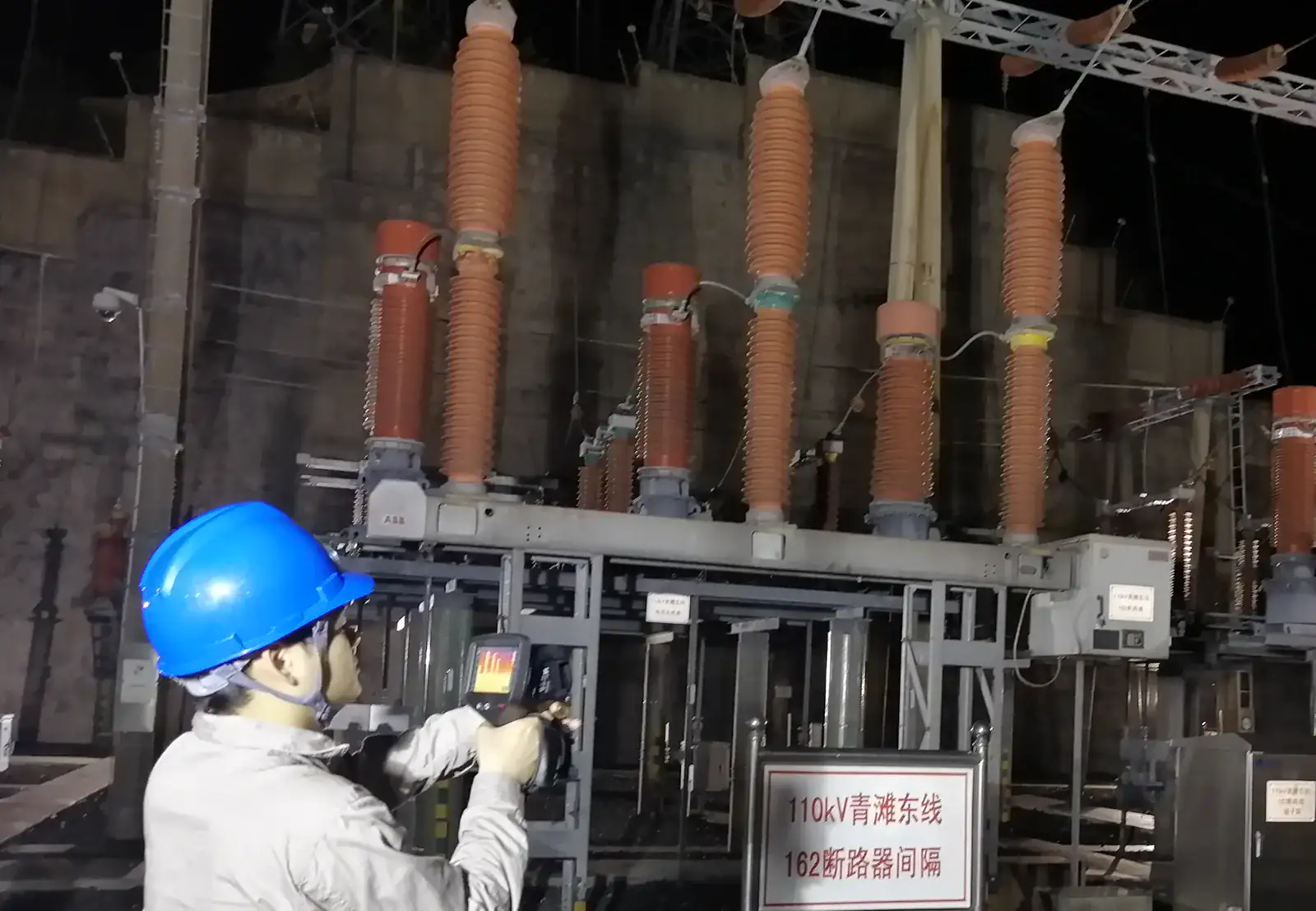
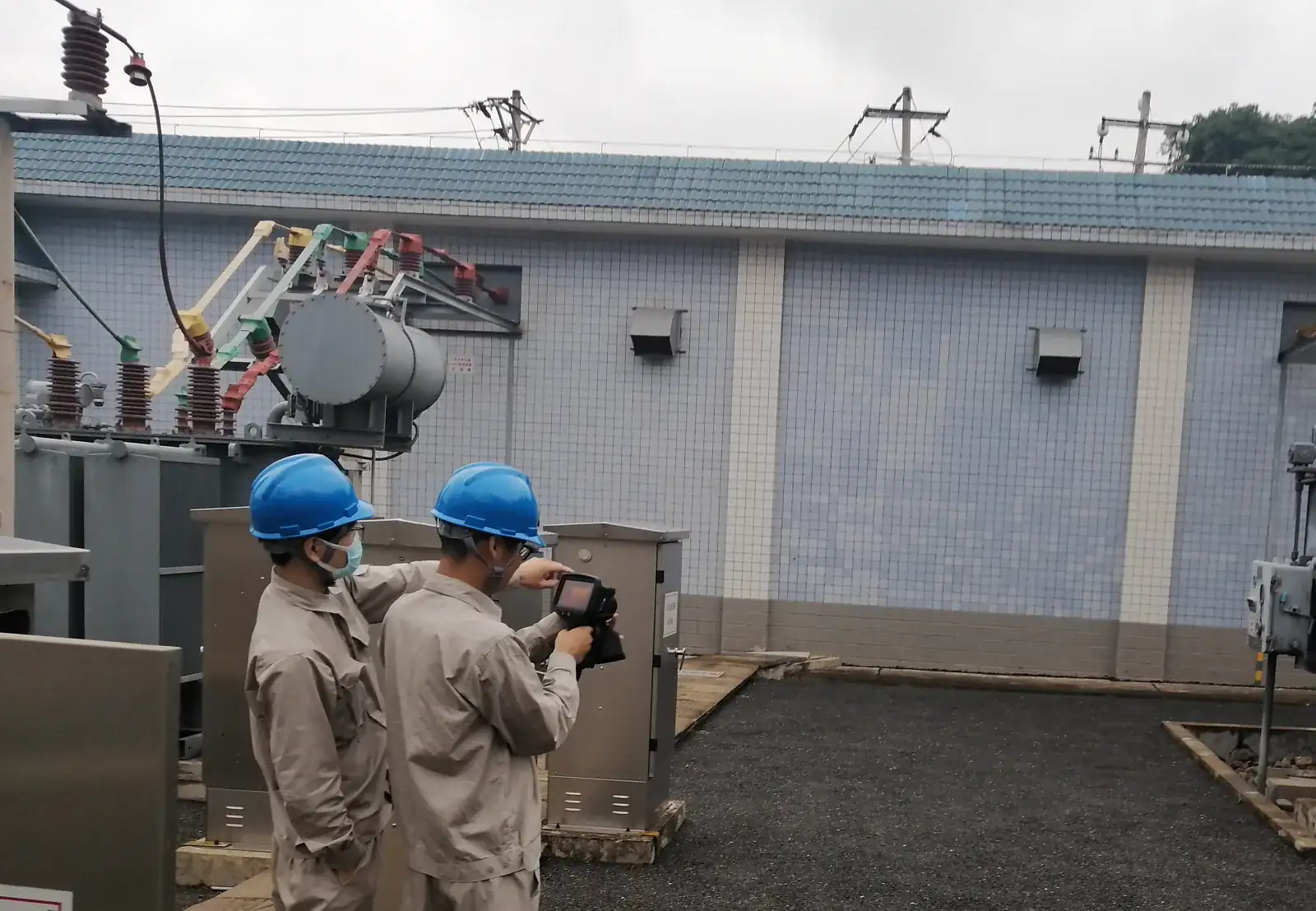
Why a night survey can be useful
Electrical loading, ambient conditions, and access patterns change over a day. A night survey may help a maintenance team observe equipment under a different operating state and identify which assets need a closer radiometric review. The photographs here document the working context, not a measured finding.
Thermal inspection workflow
- Confirm the asset list, safe route, lighting, and operating condition before imaging.
- Frame each phase, connection, bushing, cable termination, and cooling component with enough pixels on target.
- Record load current, ambient temperature, reflected temperature, emissivity, distance, and focus.
- Compare similar phases or assets and use delta-T rather than color alone.
- Save visible-light context and radiometric data together with an asset reference.
A useful thermogram is a measurement record. Palette colors are only a visualization; they cannot replace the temperature scale, measurement points, and operating context.
Evidence limits
The supplied photographs do not disclose a temperature reading, load state, emissivity setting, or confirmed maintenance result. They therefore cannot support a claim of overheating or a repair outcome. Those details are not disclosed in the supplied material.
For deeper guidance, read How to Read a Thermal Image and Why Use Thermal Imaging for Substation Inspection. Related equipment references include the Hammer II Series and PT II Series.
Next step
Request a thermal inspection recommendation through the contact page with the asset type, working distance, expected temperature range, and reporting requirements.
This anonymous field case study uses privacy-processed photographs supplied for publication. It does not identify the customer, facility, city, date, asset number, product model, measured result, or maintenance outcome.