Partial Discharge Detection Kit: What to Specify Before You Buy
Most partial discharge detection kit quotations are compared on the wrong line: the instrument. This guide breaks a kit down into the parts that actually decide whether it works on your asset list — method coverage, sensors, phase reference, calibration, reporting — and gives the twelve items to put in a request for quotation so two suppliers are priced against the same scope.
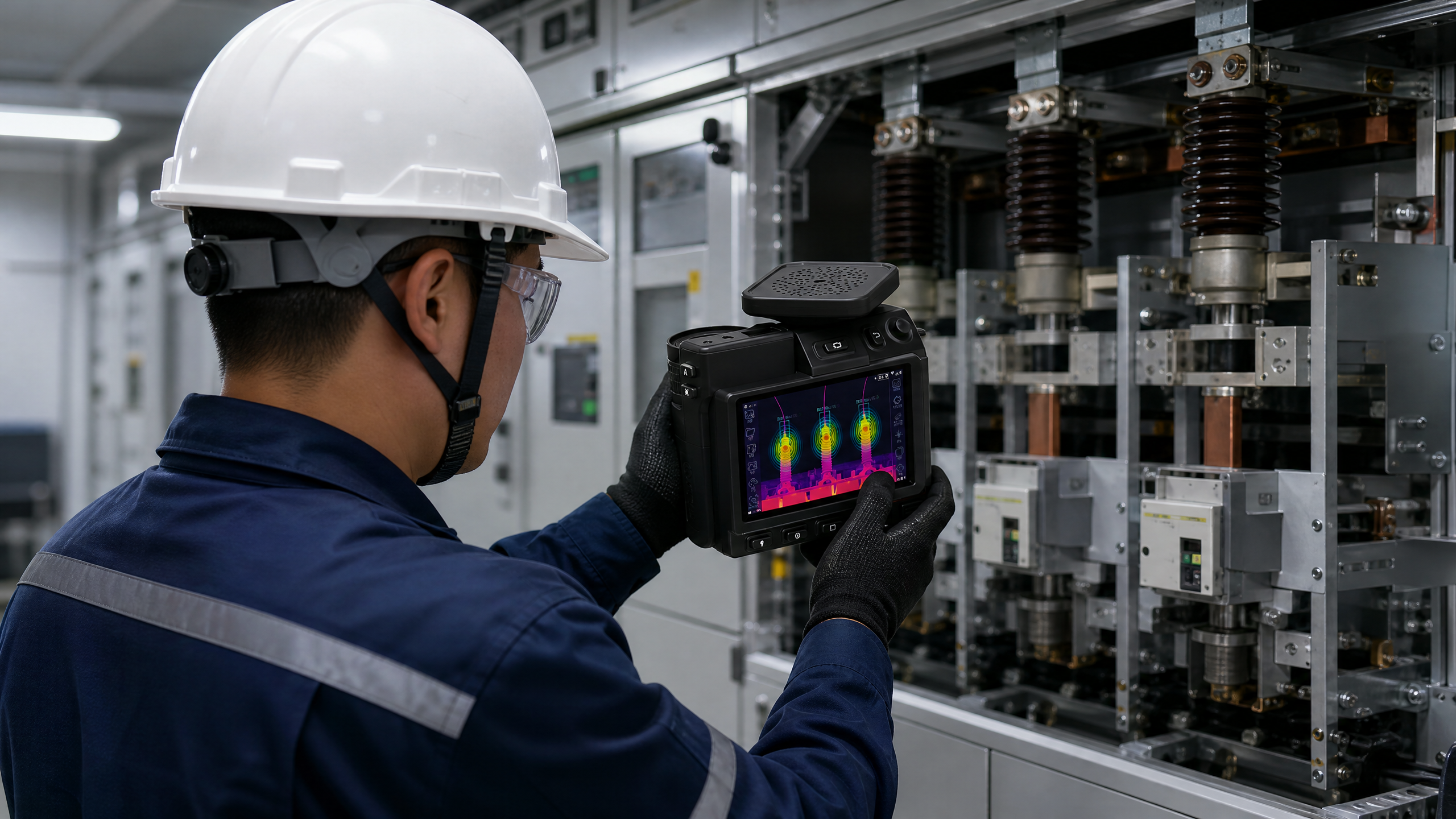
When a utility or an industrial plant issues a purchase request for a partial discharge detection kit, the comparison that follows is almost always a comparison of instruments — two handhelds, a brand name, a channel count, a price. That is the wrong line to compare. A kit is a coverage decision: which detection methods you own, on which assets, with what evidence in the report at the end. Two quotations for nominally the same detector can differ by a factor of two or three once sensors, calibration and reporting scope are counted, and neither number means anything until the scope is identical.
This guide is written from the supply side of that conversation. We quote these kits regularly, and the enquiries that go smoothly are the ones where the buyer has already written down the asset list, the access points available on each asset, and whether the deliverable is a screening round or a graded diagnosis. The models referenced here are the ones we supply: the HPD200, the HPD500, and the SC Series, which combines thermal imaging with airborne-acoustic and TEV screening. Where a datasheet value is not published for a model, this article says so rather than inferring it.
- The Short Answer
- What Actually Belongs in a Kit
- The Five Methods, and What Each One Can Conclude
- Specification Table: HPD200, HPD500, SC300, SC600
- Matching the Kit to Your Asset Mix
- What Moves the Price, and How to Compare Quotations
- Twelve Items for the Request for Quotation
- Five Ways Kits Get Bought Wrong
- Verdict
The Short Answer
Write the asset list first, then choose methods, then choose the instrument. If the list is metal-clad medium-voltage switchgear and nothing else, a two-method detector — TEV measured on the enclosure wall plus airborne acoustic for locating surface discharge and corona — covers the routine screening round, and the HPD200 is the instrument for it. If the list includes cable terminations, cable joints, transformers, rotating machines or GIS compartments, then TEV and airborne acoustic are not enough, and the four extra channels of the HPD500 (AE, UHF and HFCT, with HFCT sensitivity quoted at ≤ 3 pC) are the reason to step up.
If your team already walks the substation with a thermal camera, the question changes shape: the SC Series takes the temperature image and the discharge screening in one pass, at 384×288 (SC300) or 640×512 (SC600) IR resolution, and removes the second device from the walkdown. That is a workflow purchase rather than a detection-method purchase, and it is the one case where paying for integration beats paying for channels.
What no kit in this class replaces is an outage-based test set with traceable pC calibration, and no supplier should let you believe otherwise. Handheld screening finds and localises; it grades with the caveats that come with an energised, non-laboratory measurement. If your acceptance criteria are written against a conventional measurement standard, say so in the enquiry, because that single sentence changes which instruments belong in the quotation.
A partial discharge detection kit is specified by the assets it must reach and the report it must produce. The instrument is the last decision, not the first.
What Actually Belongs in a Kit
Suppliers use three words loosely for the same purchase — a partial discharge detection kit, a partial discharge detection device, a partial discharge detection system — and the vocabulary tells you nothing about contents. What matters is the itemised list. A complete kit for energised inspection normally contains the following six groups, and each one is a separate line in a well-written quotation.
1. The instrument itself. Handheld, battery-powered, with the display, the acquisition electronics and the analysis firmware. This is the line every buyer compares, and it is the smallest part of the difference between two offers.
2. The sensors, one per method. TEV sensing is a capacitive probe placed flat against the enclosure wall; airborne acoustic (AA) sensing is a directional microphone or an acoustic funnel aimed at the source; acoustic emission (AE) is a contact probe coupled to a tank or a cable termination; UHF is an antenna placed at a GIS inspection port or through a window; HFCT is a split-core clamp around a cable earth strap or sheath bonding lead. A “five-in-one” instrument shipped with one probe in the case is a single-method kit with an upgrade path, not a five-method kit. Count the physical sensors, not the method names.
3. The phase reference. PRPD and PRPS pattern displays — both of which appear on the datasheets of the models here — place discharge pulses against the power-frequency cycle. Without a phase reference the pattern is a scatter plot you cannot interpret against textbook fingerprints. Ask in writing how the instrument establishes phase: internal mains synchronisation, a wireless reference unit, or an assumption derived from the measured signal. If the answer is vague, the PRPD display is decoration.
4. Calibration and its paperwork. A calibrator and a traceable calibration certificate are usually separate items, and they are the difference between a survey tool and a documented test result. If your procedure, your insurer or your client requires a certificate, budget for it at the quotation stage — adding it later is always more expensive than including it.
5. Reporting and data handling. Both detectors here share data wirelessly to a phone or tablet, and both record photo and video on site. What differs between suppliers is the export path: can you produce the report format your asset-management system accepts, and does the licence cover every engineer who will use the instrument? Ask for a sample report file before you sign — it is the cheapest test of whether the kit fits your process.
6. Power, cases and consumables. Battery endurance is quoted at more than six hours for the HPD200 and HPD500, which covers a normal shift but not a double shift in a remote yard; a second battery and a vehicle charger are cheap at the quotation stage. Add the carry case, the SD card (32 GB on the SC Series), a charger for your local mains voltage, and any insulated extension pole or hot-stick adapter your safe-access rules require.
Documentation — datasheet, calibration certificate, and the certification documents your customs authority asks for — is confirmed per model and per quotation. We do not claim a blanket certification across a product family, and a supplier who does should be asked for the certificates by model number.
The Five Methods, and What Each One Can Conclude
Partial discharge is a symptom with several physical channels, and each detection method listens to a different one. Buying a kit is, in practice, buying a subset of this table. The right subset is set by the insulation systems on your asset list and by the access points your switching procedures allow — not by the number of methods a brochure lists.
| Method | Band (as published) | What it reaches | What it cannot conclude |
|---|---|---|---|
| TEV — transient earth voltage | 3 – 100 MHz | Internal discharge in metal-clad switchgear, measured on the earthed enclosure wall without opening it | No depth or phase identification of the source inside the cubicle; insensitive to discharge in unearthed or open structures |
| AA — airborne acoustic | 40 ± 1 kHz | Surface discharge, corona and tracking on open busbars, insulators, terminations and outdoor structures; localises the source in the acoustic image | Reads in dBµV, not pC; strongly affected by wind, rain and ambient noise |
| AE — acoustic emission | 20 – 200 kHz | Structure-borne discharge in transformer tanks, cable terminations, bushings and rotating machines, through a contact probe | Requires physical contact and a clean coupling surface; needs a comparison baseline between similar assets |
| UHF — ultra high frequency | 300 – 1500 MHz | Internal discharge in GIS compartments and in equipment fitted with a UHF port or window | Only as good as the coupler access; not applicable to equipment without a port |
| HFCT — high frequency current transformer | 3 – 30 MHz, sensitivity ≤ 3 pC | Cable joints, terminations and sheath/earth-bond currents on MV and HV cables | Needs the earth connection to be accessible and separable from other return paths |
Two consequences follow, and they are the ones buyers most often miss. First, the methods are not interchangeable: a TEV reading on a cable joint tells you almost nothing, because the discharge path does not couple to the enclosure. Second, amplitude is not severity across methods. A reading in dBµV from an airborne sensor and a reading in pC from an HFCT clamp are different physical quantities; trending each against itself on the same asset is meaningful, comparing them to each other is not. The method-by-method behaviour, including where each one produces false positives, is set out in our HPD200 versus HPD500 comparison, and the physical distinction between discharge types in PD versus corona versus arcing.
Specification Table: HPD200, HPD500, SC300, SC600
The table below uses published datasheet values for the four models we quote most often in this category. Where a value is not published for a model, it is marked as such rather than estimated from a sibling product.
| Specification | HPD200 | HPD500 | SC300 | SC600 |
|---|---|---|---|---|
| Detection methods | TEV, AA | TEV, AA, AE, UHF, HFCT | AA, TEV + thermal imaging | AA, TEV + thermal imaging |
| TEV band | 3 – 100 MHz | 3 – 100 MHz | 3 – 100 MHz (0 – 60 dBmV) | 3 – 100 MHz (0 – 60 dBmV) |
| AA band / dynamic range | 40 ± 1 kHz; −8 to 68 dBµV | 40 ± 1 kHz; −8 to 68 dBµV | 40 ± 1 kHz; −8 to 68 dBµV | 40 ± 1 kHz; −8 to 68 dBµV |
| AE band | — | 20 – 200 kHz | — | — |
| UHF band | — | 300 – 1500 MHz | — | — |
| HFCT band / sensitivity | — | 3 – 30 MHz; ≤ 3 pC | — | — |
| Thermal IR resolution | — | — | 384 × 288 | 640 × 512 |
| Thermal NETD / accuracy | — | — | < 40 mK @ 30 °C; ±2 °C or ±2 % | < 40 mK @ 30 °C; ±2 °C or ±2 % |
| Thermal range | — | — | −20 to +150 °C / 0 to +410 °C; up to +2000 °C optional | −20 to +150 °C / 0 to +410 °C; up to +2000 °C optional |
| Data link | Wi-Fi to phone or tablet | Wi-Fi to phone or tablet | On-board display and 32 GB SD card | On-board display and 32 GB SD card |
| Display | Phone or tablet (no built-in display published) | Phone or tablet (no built-in display published) | 4.3 in / 5 in sunlight-visible | 4.3 in / 5 in sunlight-visible |
| Battery life | > 6 hours | > 6 hours | > 3 hours at 25 °C | > 3 hours at 25 °C |
| Weight | Not published | 450 g | 1.13 kg with battery | 1.13 kg with battery |
| Operating temperature | −20 to +55 °C | −20 to +55 °C | Not published | Not published |
| Ingress protection | Not published | Not published | IP54 | IP54 |
Three rows carry more purchasing weight than their position in the table suggests. Weight decides how long an operator keeps the probe in contact on an overhead structure: 450 g held at arm's length is a different working day from 1.13 kg. Battery sets the shape of the round: a three-hour instrument belongs indoors with a charger at lunch, a six-hour instrument covers a shift. And the data link is the difference between a report written on site and one transcribed from photographs two days later — the single largest source of lost findings in utility inspection programmes. If you are comparing the SC300 and SC600 against each other rather than against a detector, our SC300 versus SC600 comparison isolates the resolution question.
Matching the Kit to Your Asset Mix
These are the five fleets we are asked to quote for most often, and the kit each one actually needs.
Metal-clad MV switchgear only. TEV plus airborne acoustic covers the routine round: TEV through the enclosure wall on every cubicle, AA through the ventilation paths and at cable boxes, both recorded against the same asset ID. The HPD200 does this with two methods at the entry tier. Add nothing else until the asset list grows — extra channels you never energise are a maintenance cost without a finding.
Switchgear plus cable terminations and joints. This is where the step to the HPD500 pays. Cable discharge is a sheath-current phenomenon; you need an HFCT clamp on the earth strap, and the ≤ 3 pC sensitivity figure is the one to compare between offers. Cable work also commonly produces surface discharge at terminations, which the AA channel localises, so this fleet genuinely uses three methods on one walk.
GIS. UHF, through the inspection ports, is the only one of these methods that reaches inside a gas compartment. If your GIS has ports, specify UHF and confirm the coupler type in the quotation; if it does not, no UHF channel will help and the honest answer is that internal diagnosis belongs to the OEM's own test equipment during an outage.
Transformers, bushings and motors. AE contact measurement, plus thermal for the cooling circuit. The AE channel's value here is comparison between similar units: an absolute reading of a tank is far less informative than the same measurement across a fleet of five sister transformers.
Outdoor yards, overhead lines and structures. Airborne acoustic, at distance, with thermal alongside. This is where the SC Series earns its place: SC300 or SC600 gives the temperature image and the AA and TEV screening in one instrument, so the technician who is already looking for a hot clamp can also hear the discharge at the same fitting. For pure acoustic localisation at longer range — corona on insulator strings, for example — an acoustic imaging camera is the better tool, and the division of labour between the two instrument types is set out in our thermal versus acoustic PD detection note.
Two practical notes apply to all five. First, screening and diagnosis are different deliverables, and a kit sized for screening will not produce a diagnosis no matter how the report is worded. Screening answers “which assets need attention”; diagnosis answers “what kind of defect, where, and how fast is it growing”, and it needs trend data from repeated measurements of the same point. Second, the round is only as good as its asset register: the ability to attach a measurement to a specific cubicle, with a photograph, is worth more in year two than any single extra method in year one.
What Moves the Price, and How to Compare Quotations
We do not publish list prices for partial discharge detectors, because two quotations for what looks like the same instrument can legitimately differ by a factor of two or three. The number follows the configuration, and the configuration follows the questions below. A structured breakdown of the cost drivers is on our PD detector price page, and it is worth reading before you open the quotations.
Detection methods. A two-method handheld sits at the entry tier. Each additional method adds a sensor, an acquisition channel and firmware, so the five-method configuration is a different product category rather than an option pack.
Channels and synchronisation. Single-channel units are for survey rounds; multi-channel units that record several points at once, or that synchronise to a phase reference, are for diagnosis work. Ask which one you are being quoted.
Calibration and certification. A traceable certificate and a calibrator are separate items. On a tender, a quotation without them is not comparable to one with them, even when the headline instrument price is lower.
Accessories and sensors. Probes, couplers, clamps and spare sensors are frequently quoted separately. A “cheap” detector with three extra sensors often costs more than a multi-method unit that includes them.
Software and data handling. Wireless apps, reporting software and trending tools vary between models and may be licensed per user or per site. Ask for the licence model in writing.
Branding and packaging. OEM branding, neutral packaging and custom labels are quoted as a one-off tooling cost plus a per-unit difference. Relevant if you distribute rather than operate.
Quantity and Incoterms. Wholesale quantities reduce the unit price; EXW, FOB, CIF and DDP change the landed cost rather than the instrument price. Compare like with like, then add freight and duty separately.
The clean way to compare two offers is a five-line check: same method list, same scope of supply (count every sensor, probe, calibrator, case, charger and licence), same calibration paperwork, same trade term, same written statement of warranty length, spare-part availability and lead time. Any offer that cannot be reduced to those five lines is not yet a quotation.
Twelve Items for the Request for Quotation
Send these twelve answers with the enquiry and the model selection stops being a matter of opinion. We quote against them, and we will tell you when the answer is “no kit” rather than sell a configuration that will disappoint.
- Asset list by insulation system. Switchgear, cables and joints, GIS, transformers, rotating machines, overhead structures — with voltage class and rough counts for each.
- Access points available. Enclosure wall, cable earth strap, GIS port, tank surface, or nothing but line of sight.
- Energised or de-energised. Which assets can be inspected in service under your switching rules, and which only during an outage.
- Deliverable. Screening round with a ranked list, or a graded diagnosis with trend data and severity classes.
- Reference standard. Whether your acceptance criteria cite a conventional measurement standard, and whether a traceable pC calibration is therefore required.
- Phase reference. Whether PRPD/PRPS pattern interpretation is part of the deliverable, and therefore how phase must be established.
- Reporting format. The fields your asset-management system or client report needs, and whether a sample export can be supplied for approval.
- Operators and training. How many engineers will use the kit, and whether a second battery or a lighter instrument changes the length of a round.
- Environment. Indoor cubicle corridors or outdoor yards, ambient temperature range, wind and rain exposure during the inspection season.
- Accessories. Insulated pole or hot-stick adapter, spare sensors, case, local mains charger, SD cards.
- Documents. Calibration certificate, datasheet, and the certification documents your import process requires — confirmed per model and quotation.
- Commercial terms. Quantity, delivery country, required Incoterm, target date, and whether neutral or OEM branding is needed.
Two answers usually settle the configuration before question six: the asset list by insulation system, and whether the deliverable is screening or diagnosis. Everything after that refines the quotation rather than the model.
Five Ways Kits Get Bought Wrong
Buying instruments instead of coverage. The most common failure is two offers compared on the detector's headline specification while one includes four sensors and the other includes one. The cheaper offer is usually the one that will need a second purchase within a year.
Leaving the calibrator out. A kit without calibration paperwork produces readings that cannot be defended in an asset-condition report. If you intend to act on the findings, budget the calibrator at the start.
Assuming the PRPD display solves interpretation. A pattern is only as good as its phase reference and the training of the person reading it. If nobody on the team has been trained on pattern recognition, the money is better spent on more points measured per round than on a display nobody can read.
Ignoring the reporting path. A finding that stays in a photograph folder is a finding that did not happen. Test the export before you buy, not after the first survey.
Over-reading an energised measurement. Handheld screening on live equipment is not a substitute for an outage test, and a “no discharge detected” line in a report must be written as “no discharge detected with method X at access point Y”. That phrasing is what keeps a screening programme honest, and it is also what your auditor will ask for. For the measurement-side questions — what a high reading means, and why readings drift — see why a PD detector reading is high and how to detect partial discharge in substations.
Verdict
Specify the kit as a coverage document, not a wish list. Write down the insulation systems you own, the access points your switching rules allow, the number you must put in the report, and whether a calibrated pC result is required. That document decides everything else: TEV and AA for a switchgear-only fleet (HPD200), five methods once cables and GIS enter the list (HPD500), and thermal-plus-screening in one pass where the team already walks with an imager (SC300 or SC600).
Then compare offers line by line — sensors, phase reference, calibration, licences, trade term — and treat a quotation you cannot decompose as an incomplete quotation rather than a cheap one. If you send us the twelve answers above, we will confirm the configuration, the accessories and the documentation for your country in writing, and say so if a smaller kit meets the requirement.
Buy the methods your asset list needs, and buy the report your auditor will accept. Utilities that specify the instrument first spend the second year explaining why the findings could not be used.
Specify your PD detection kit
Send the asset list by insulation system, the access points available on each, whether the deliverable is screening or graded diagnosis, and the documentation your import process requires. We will confirm the model and configuration — HPD200, HPD500 or SC300/SC600 — and quote it against that scope.