SF6 Leak Inspection at a Substation: What the Photos Document
This anonymous field record shows outdoor GIS equipment and a leak-inspection activity. It separates visible context from the leak rate, repair status, and other information that only a formal test can establish.
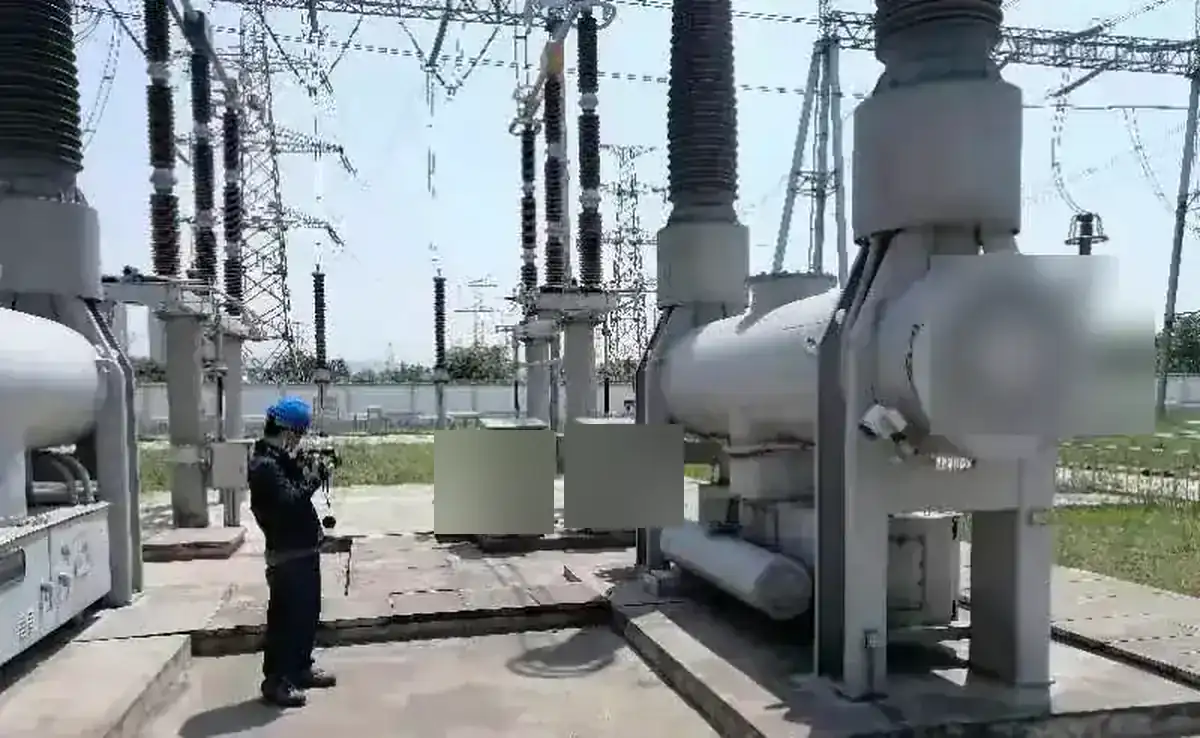
Observed in the supplied photographs: outdoor high-voltage apparatus, enclosure joints, and an operator positioned near the equipment with an inspection instrument.
Not disclosed in the supplied material: gas concentration, leak rate, compartment pressure, equipment identifier, repair status, customer name, and exact site location.
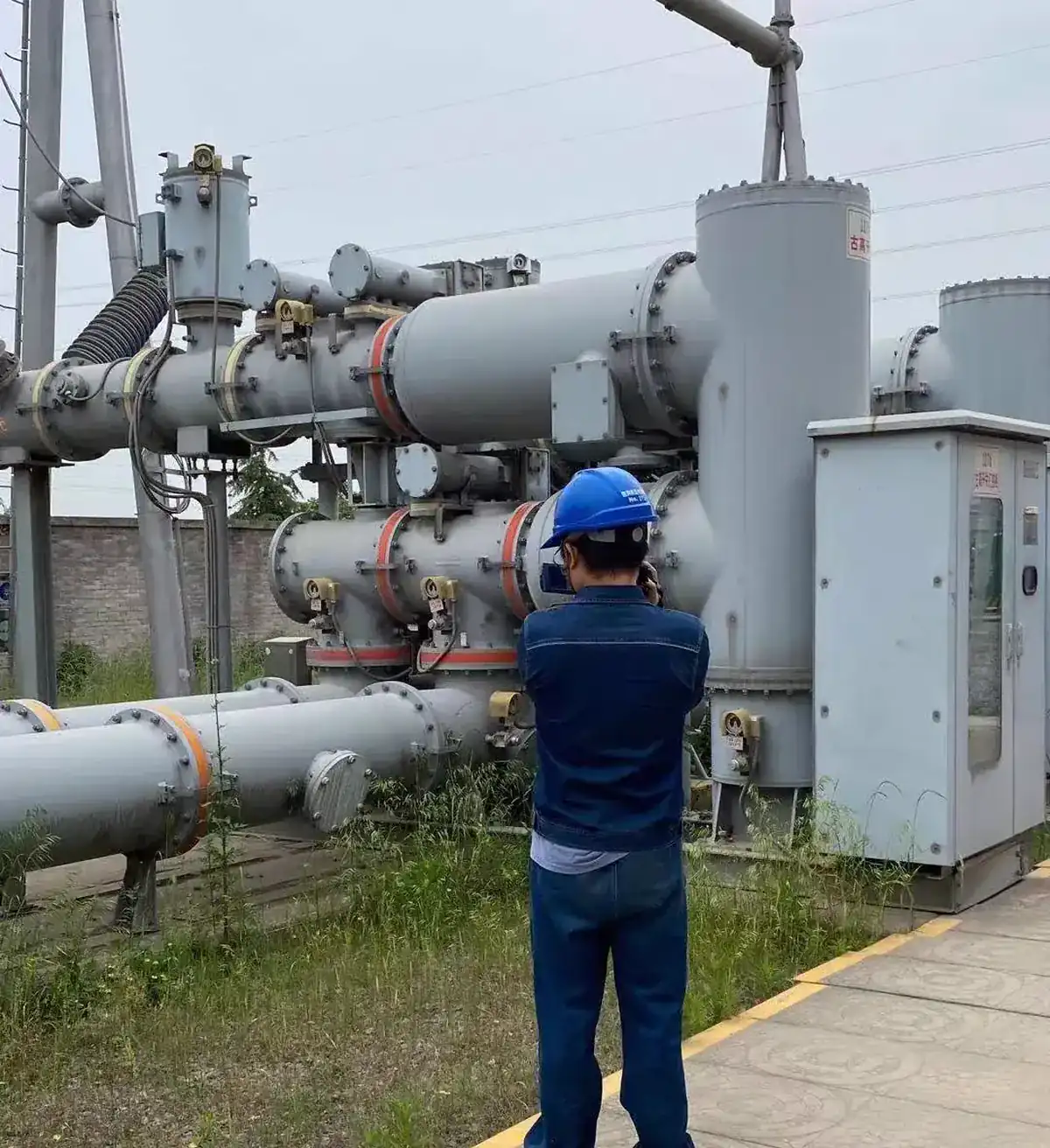
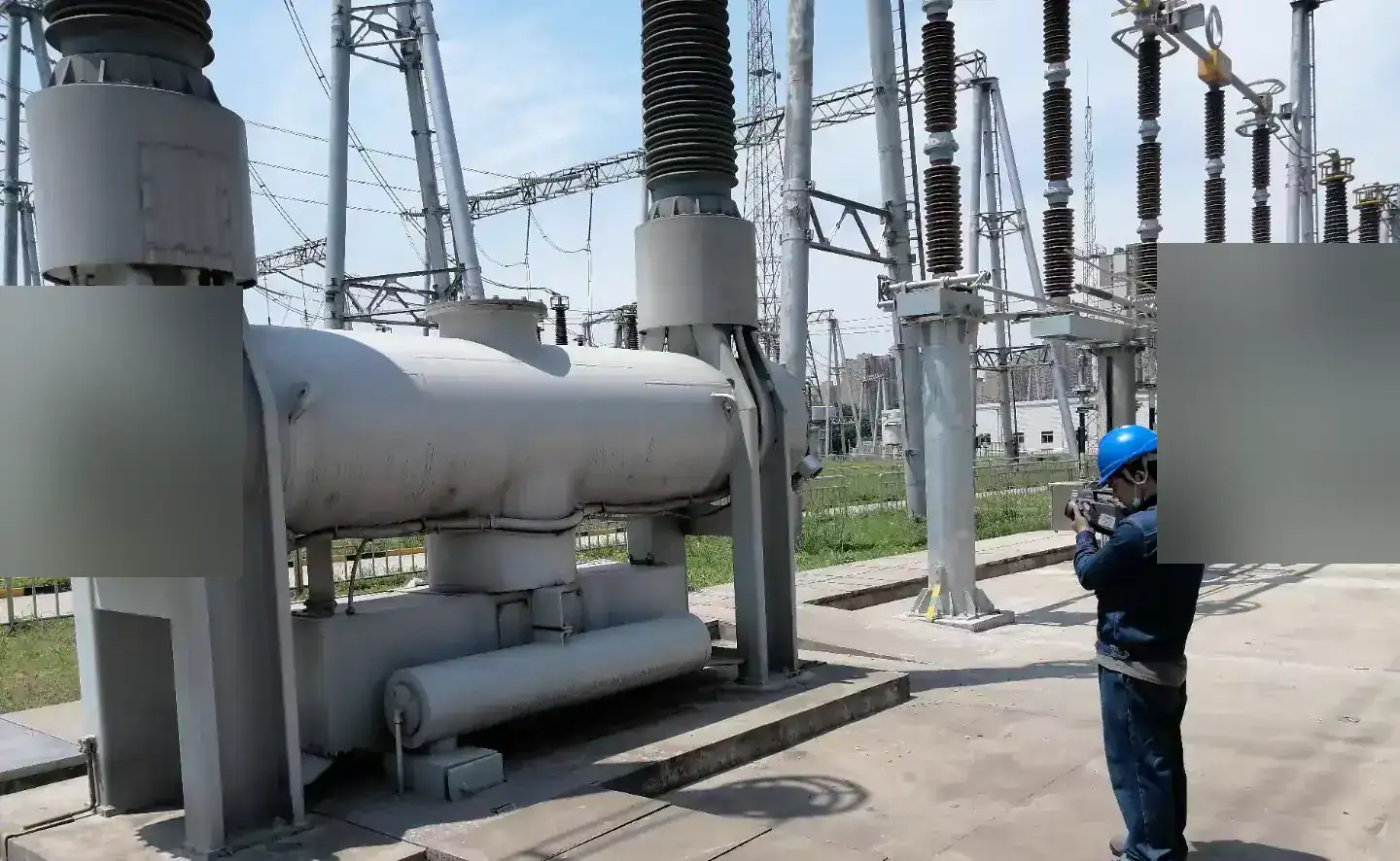
What can be read from the photographs
The images show the scale and access conditions of an outdoor inspection around sealed electrical equipment. They are useful for explaining why a non-contact screening method can be valuable, but they do not prove that a leak was detected or repaired.
A practical SF6 screening route
- Review density alarms, top-up history, and the equipment drawing before the walkdown.
- Set a safe observation position and scan the compartment exterior, flanges, valves, monitors, and bushing interfaces.
- Use the live acoustic image and spectrum to separate a continuous gas-flow signature from mechanical noise or electrical discharge.
- Repeat the observation from a second angle and record the suspected joint against an asset reference.
- Escalate the finding for confirmation with the utility’s approved leak-measurement or optical method.
Acoustic imaging is a fast screening layer: it can help a team locate a suspected source without touching energized equipment. A confirmed leak rate and environmental report require calibrated measurements and documented operating conditions.
What this case study does not claim
No temperature, gas quantity, pressure, emission value, fault classification, or repair outcome is visible in the supplied material. Those details are not disclosed in the supplied material and should not be inferred from the photographs.
For the method background, read How Acoustic Cameras Detect SF6 Leaks in GIS Switchgear. Related equipment references include the SW136 and GSW Series.
Next step
For a survey quotation, provide the GIS arrangement, access distance, required reporting fields, and whether the equipment remains energized through the contact page.
This anonymous field case study uses privacy-processed photographs supplied for publication. It does not identify the customer, facility, city, date, asset number, product model, measured result, or maintenance outcome.